Remote Control Car
overview
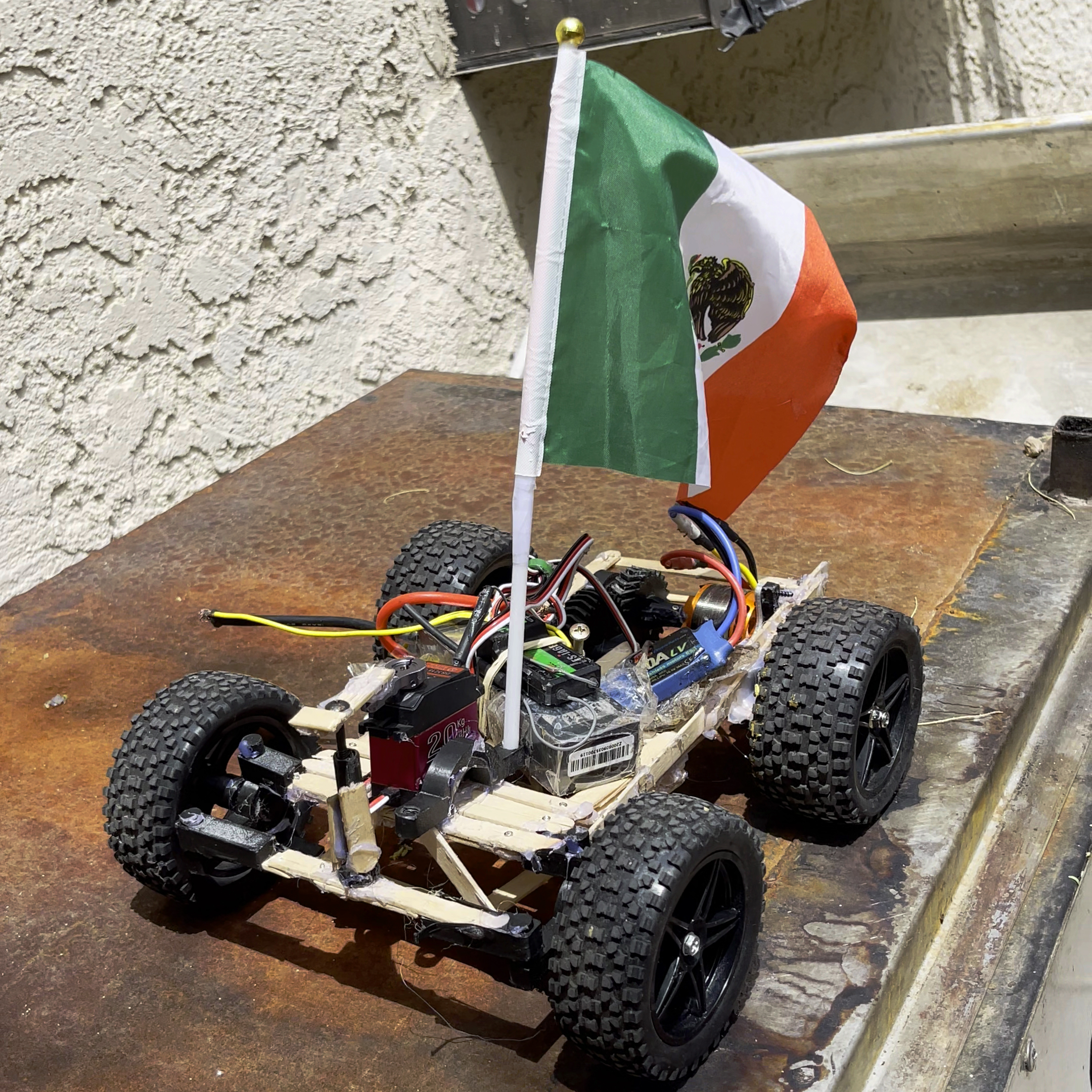
This project challenged me to design and build a fully functional RC vehicle almost entirely from scratch using custom-designed and 3D-printed components. From the drivetrain and steering system to the open differential and chassis, every major mechanical system was designed in Fusion 360, manufactured through 3D printing, and integrated into a working vehicle
details
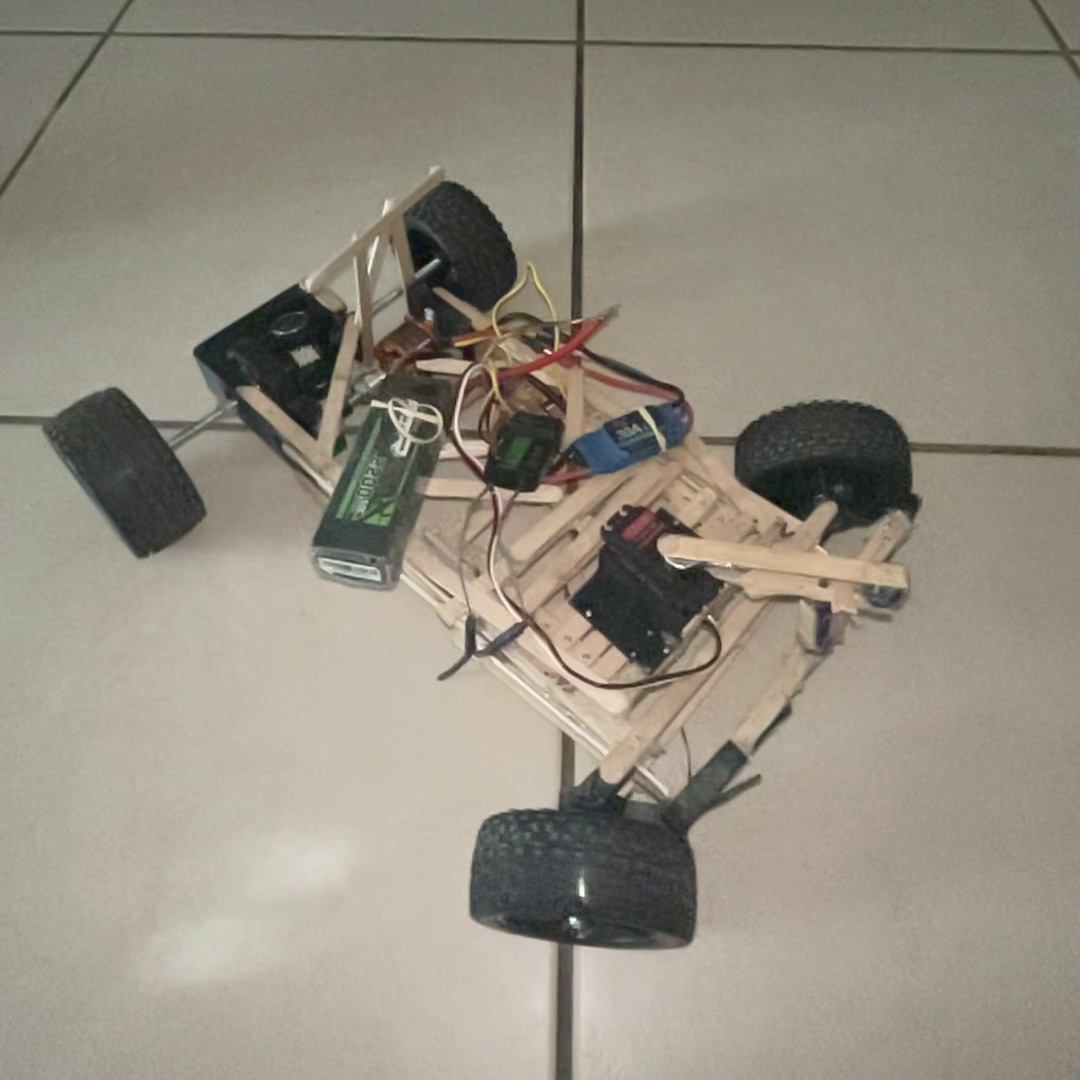
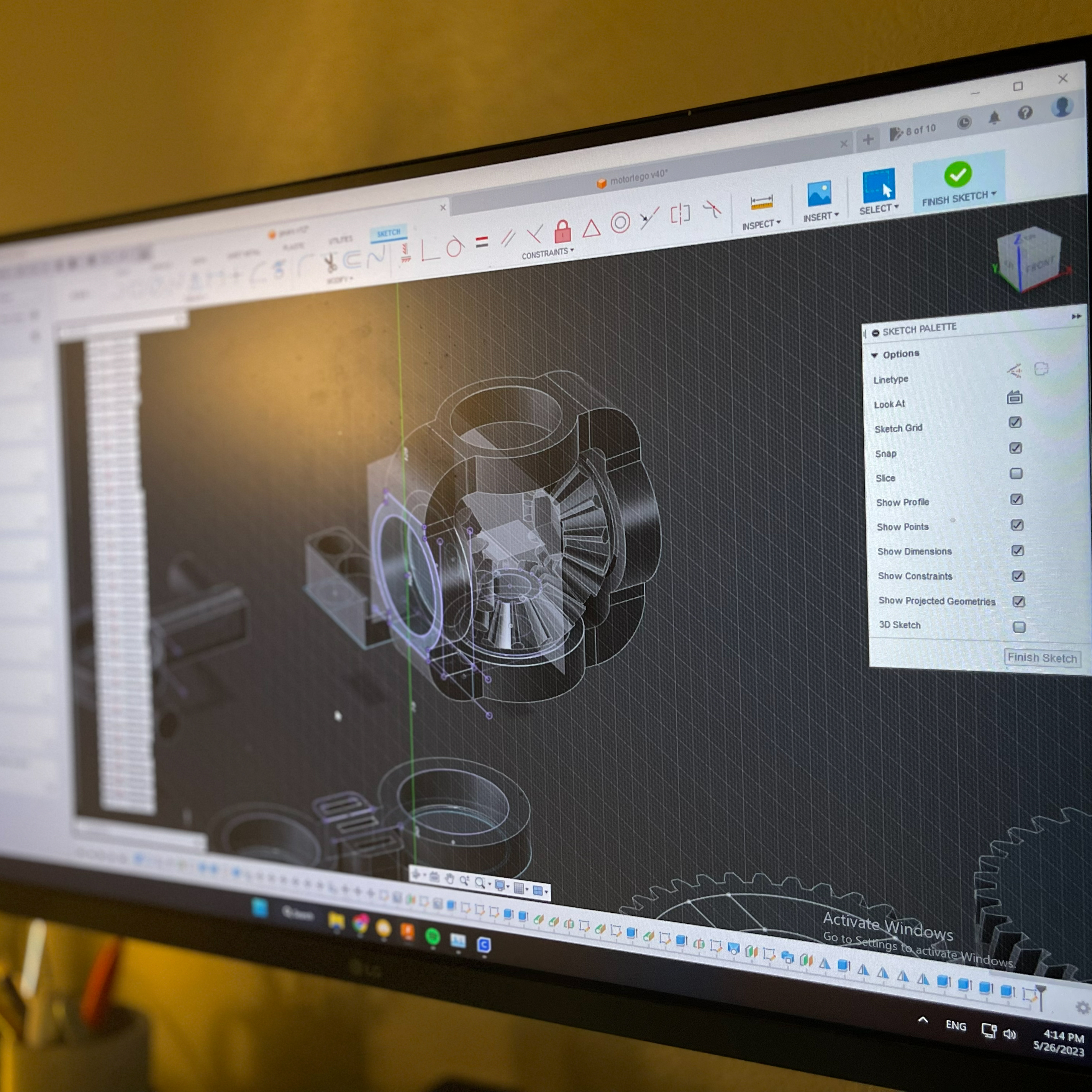
This project started as a fun personal challenge to see if I could design and build a fully functional RC car almost entirely from scratch using mostly 3D-printed parts and popsicle sticks because I had basically no budget. Over the course of about two months, I designed nearly every mechanical component myself in Fusion 360. What started as a simple idea quickly turned into one of the most challenging and rewarding engineering projects I have worked on.
The very first chassis was made from popsicle sticks because they were lightweight, cheap, and easy to modify while I was still experimenting with different designs. It didn't take long before the drivetrain started exposing weak points, and what I originally thought would be a quick build eventually turned into about six complete redesigns. Every time something broke, I learned why it failed, redesigned it, and built a better version.
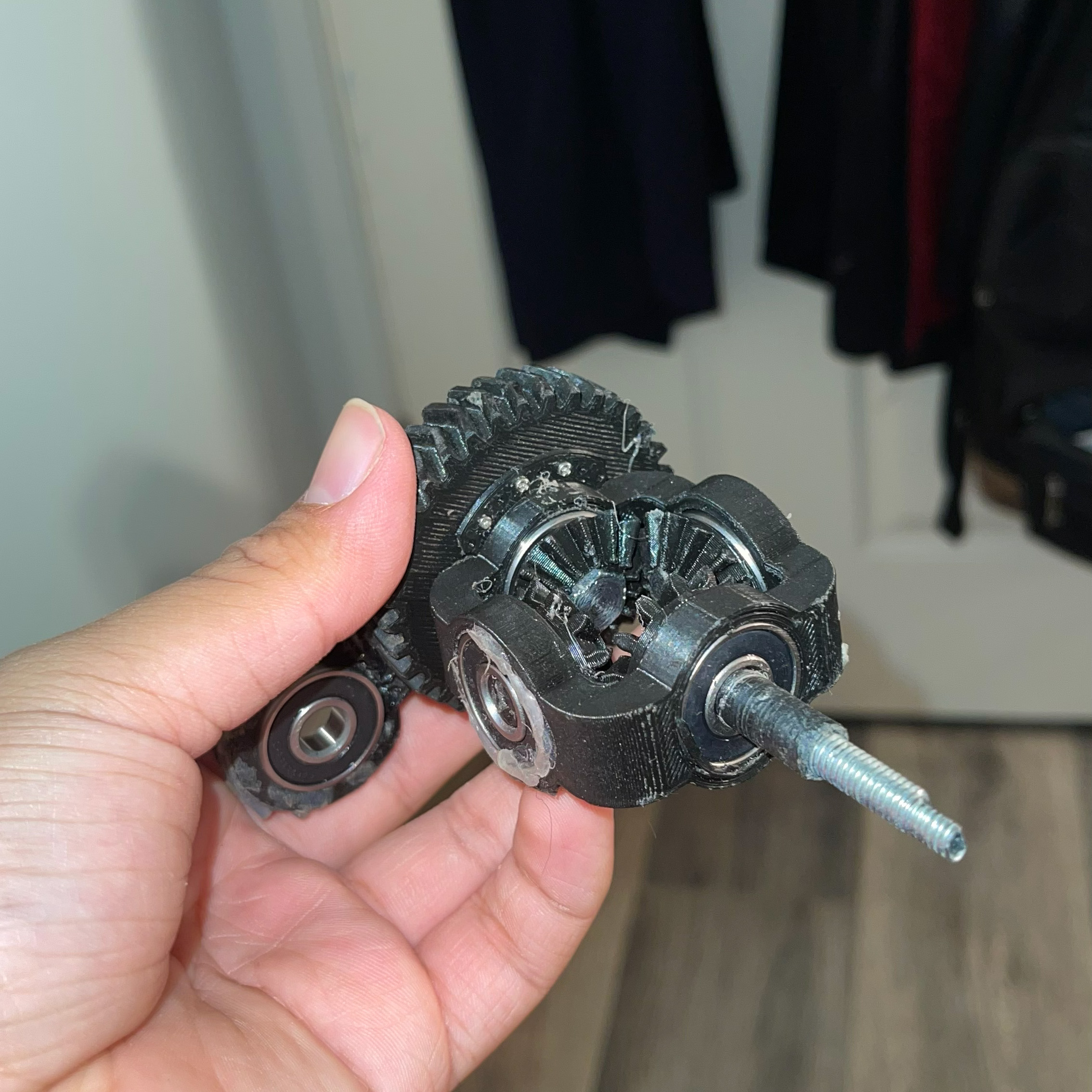
The differential was by far the most difficult part of the entire project. Instead of downloading an existing model (which wouldn't have worked anyway), I designed the entire mechanism from scratch. At the time, I couldn't find a gear generator for bevel gears, so I had to manually model every bevel gear myself. The final design used two double-helical herringbone gears driving four bevel gears, and it became the foundation of every version of the car.
The drivetrain was powered by an outrunner brushless motor connected to a custom gear reduction system that I also designed and printed.
One of the biggest problems I ran into was with the axles. I originally used 3D-printed axles, but they couldn't handle the bending and twisting loads from driving over uneven ground. So, instead of buying stronger hardware, I repurposed screws into custom axles by sanding a flange onto them.
The steering system was intentionally kept simple. I designed a custom servo linkage with a single steering bar and two pivot joints that was easy to make while still providing smooth and reliable steering.
As I continued testing, I noticed that even slightly bent shafts created enough vibration to crack the chassis around the differential. That led me to redesign the entire drivetrain housing into a much more rigid, fully enclosed structure that greatly improved the strength and reliability of the vehicle. The final version ended up being the strongest and most successful iteration, surviving much longer than any of the previous designs.
The project eventually came to an end after the brushless motor began to fail, but by that point I had already done what I had set out to do, so I decided to end the project and scrap the parts. Looking back, that process of constant failure I had to endure really toned me to have more overall patience when working on projects.